Miami-Dade Real Estate Market Update: July 2026
Christel Renaud August 27, 2026
Christel Renaud August 27, 2026
Miami-Dade’s real estate market continues to evolve, and the July numbers reveal an increasingly nuanced landscape. While single-family homes maintained impressive year-over-year price growth, the condominium sector experienced a notable adjustment—reinforcing an important reality for today’s buyers and sellers: Miami is not one market.
Different property types, neighborhoods and price points are moving at very different speeds, making a deeper understanding of the numbers increasingly important.
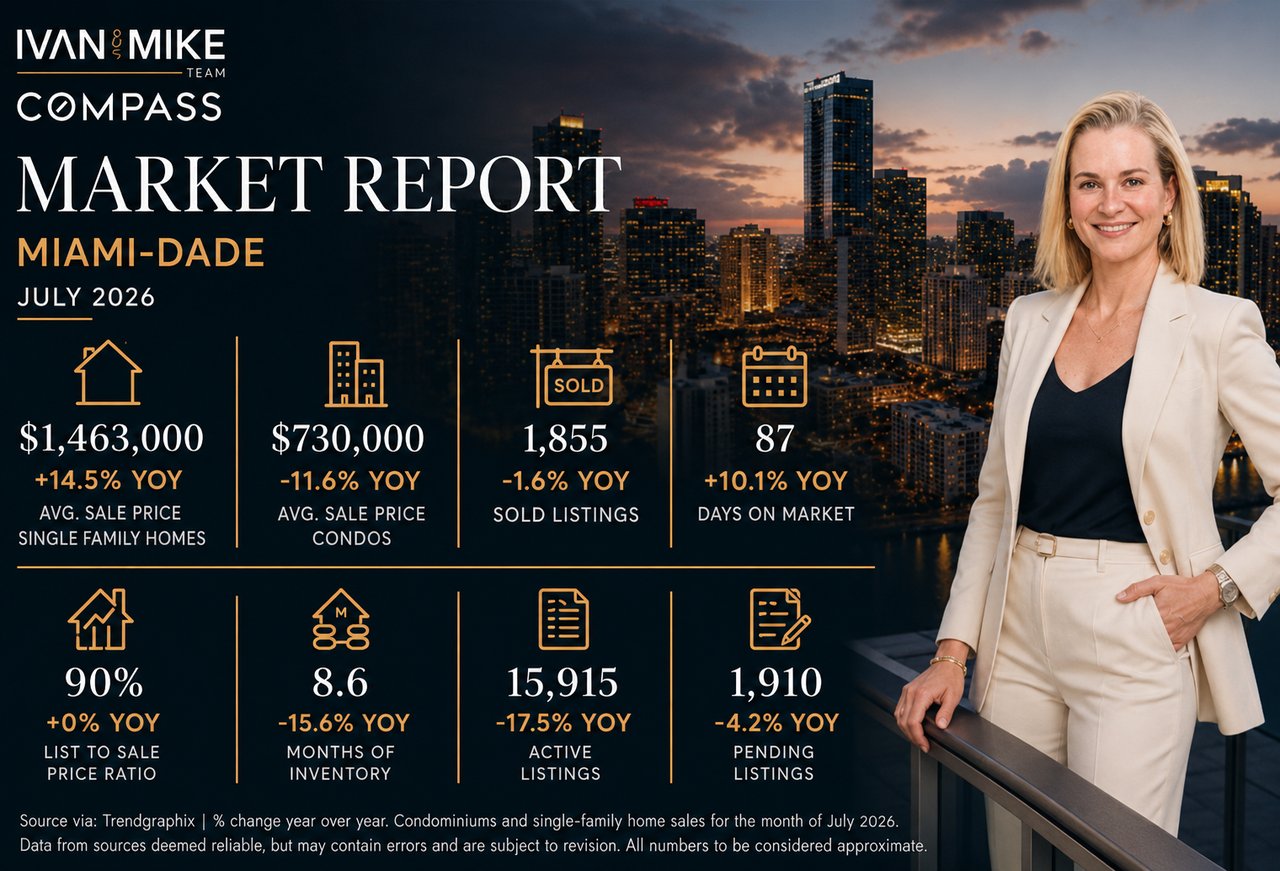
Here are the key indicators for the month:
One of July’s most significant figures is the continued strength of Miami-Dade’s single-family home market.
The average sale price reached $1.463 million, up 14.5% compared with July 2025. This continued appreciation highlights the resilience of the single-family segment, particularly in a market where desirable locations and quality inventory remain limited.
For sellers with well-positioned homes, this remains encouraging. However, stronger overall pricing does not mean every property will command a premium. Buyers are increasingly discerning, and condition, location, presentation and pricing remain critical.
Condominiums moved in the opposite direction in July, with the average sale price falling 11.6% year over year to $730,000.
That does not necessarily mean Miami-Dade condos as a whole have lost 11.6% of their value. Average sale prices can be influenced by the mix of properties that closed during a particular month. Luxury waterfront residences, newer developments, older condominium buildings and more affordable units can behave very differently.
For buyers, however, the shift is worth watching. Softer pricing in certain parts of the condo market may create opportunities that were considerably more difficult to find during the rapid appreciation of recent years.
Active listings declined 17.5% year over year, while months of inventory fell 15.6% to 8.6 months.
At the same time, pending sales decreased 4.2% and closed sales declined 1.6%.
Together, these numbers paint an interesting picture: supply is tightening, but buyers are not rushing into every available property.
Homes also spent an average of 87 days on the market, 10.1% longer than a year ago. The list-to-sale price ratio remained at 90%, another indication that buyers continue to negotiate and that aspirational pricing can make it more difficult for a property to gain traction.
For sellers, strategic positioning is becoming increasingly important.
Simply looking at Miami-Dade’s overall price trends is not enough. A seller needs to understand the competition within the property's specific building, neighborhood, price range and property type.
Properties that are priced appropriately and marketed effectively can still stand out, particularly as overall inventory declines. Those that enter the market above what buyers perceive as fair value may face longer marketing periods and eventually require price adjustments.
For buyers, today's market may offer more room for negotiation—particularly within portions of the condominium market.
The key is distinguishing between a genuine buying opportunity and a property whose pricing reflects building-specific, financial or market-related concerns.
In a market this segmented, analyzing recent comparable sales, current competition, days on market, building fundamentals and seller motivation can be just as important as looking at the asking price itself.
Perhaps the most important takeaway from July is the widening contrast between different segments of Miami-Dade real estate.
Single-family home prices rose substantially while average condominium prices declined. Inventory tightened while properties took longer to sell. Buyers remain active, but increasingly selective.
For both buyers and sellers, the headline numbers only tell part of the story.
Understanding what is happening at the neighborhood, building and property level is where the real insight—and often the opportunity—can be found.
If you are considering buying or selling in Miami-Dade and would like to understand how these market trends apply to your specific property, building or neighborhood, I would be happy to provide a personalized market analysis.
Christel Renaud
Real Estate Advisor | Compass
📱 786-512-4202
📧 [email protected]
Source: Trendgraphix. July 2026 Miami-Dade condominium and single-family home sales. Percentage changes shown year over year. Data from sources deemed reliable but may contain errors and is subject to revision. All figures should be considered approximate.
Stay up to date on the latest real estate trends.




Panoramic Water Views Every Day

Why Branded Residences Are Redefining Luxury Living
Get assistance in determining current property value, crafting a competitive offer, writing and negotiating a contract, and much more. Contact me today.